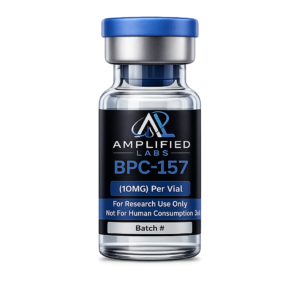
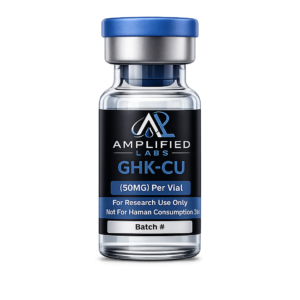
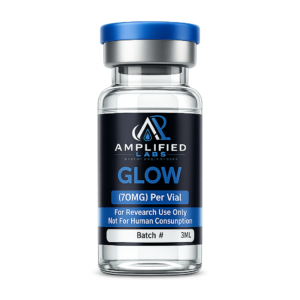
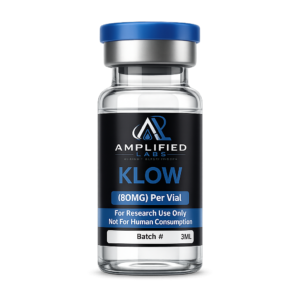
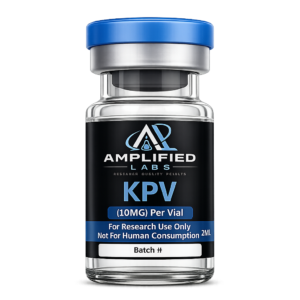
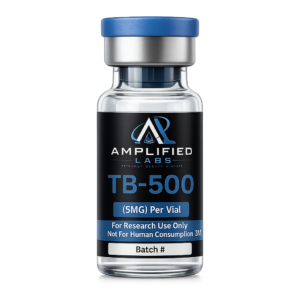
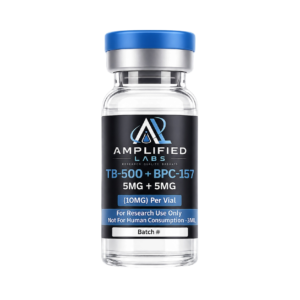
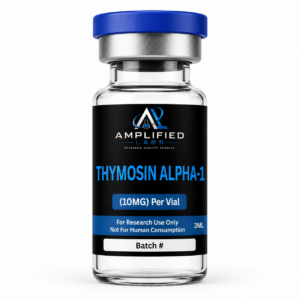
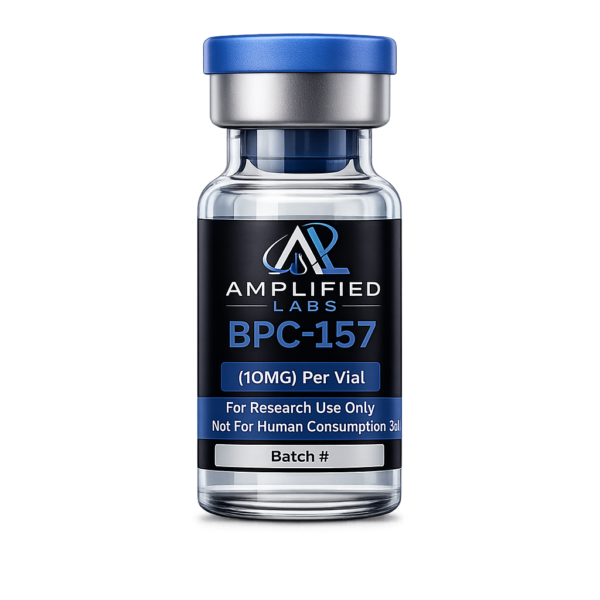
Our Recovery and Repair range brings together eight lyophilized research materials: five individual listings and three fixed-composition blends. BPC-157, GHK-Cu, KPV, TB-500 and Thymosin Alpha-1 are each offered on their own, at the amount or options shown on each listing. Wolverine, GLOW and KLOW combine two, three or four of those materials at stated milligram amounts. All materials are supplied for laboratory research use only. Open any listing in the grid below to see what is available, or use the comparison beneath it to see exactly what each blend contains.
If BPC-157 or TB-500 is on your list, the Black Friday and Cyber Monday sale explains product eligibility and the one-use limit.
Wolverine, GLOW and KLOW: constituent comparison
Each blend label states a total mass and the amount of every named constituent. The table sets these side by side so you can see what changes from one blend to the next.
Listed constituents of the Wolverine, GLOW and KLOW blends (nominal mg)| Blend option | BPC-157 | TB-500 | GHK-Cu | KPV | Listed total |
|---|
| Wolverine (BPC-157 + TB-500) 10 mg | 5 mg | 5 mg | Not listed | Not listed | 10 mg |
|---|
| Wolverine (BPC-157 + TB-500) 20 mg | 10 mg | 10 mg | Not listed | Not listed | 20 mg |
|---|
| GLOW 70 mg | 10 mg | 10 mg | 50 mg | Not listed | 70 mg |
|---|
| KLOW 80 mg | 10 mg | 10 mg | 50 mg | 10 mg | 80 mg |
|---|
Wolverine pairs BPC-157 and TB-500 in equal amounts. GLOW lists 10 mg of each and adds 50 mg GHK-Cu. KLOW lists the same three amounts as GLOW and adds 10 mg KPV, which is the only constituent that separates the two. Thymosin Alpha-1 is not a listed constituent of any of these blends.
Where each constituent is offered on its own
- BPC-157: 5 mg, 10 mg or 20 mg. Listed in all three blends.
- TB-500: 5 mg or 10 mg. Listed in all three blends.
- GHK-Cu: 50 mg or 100 mg. Listed in GLOW and KLOW. GHK-Cu also appears in Skin and Aesthetic Peptides.
- KPV: 10 mg per vial. Listed in KLOW only.
- Thymosin Alpha-1: 10 mg. A separate material that is not part of any blend in this range.
A shared constituent shows where a material appears. It does not mean that separately listed materials can be combined, or that a combination of separate listings is equivalent to a blend.
Read composition and report scope together
A blend’s label amounts and its analytical findings are different things. The label gives nominal constituent masses. A certificate of analysis (COA) reports what was tested on a particular sample or lot, by a stated method. For a blend, check three points. Does the report’s sample or lot match the blend and option you are reviewing? Does it identify each named constituent? Does it quantify each constituent separately, or give only a single overall figure?
Available original reports can be searched by product name, report number or full lot number in the COA Finder. Each report covers only the sample and tests it describes. Our quality and testing program explains how testing documentation is organized.
Recovery and Repair Peptides FAQs
Which Recovery and Repair products are individual materials and which are blends?
Five products are individual materials: BPC-157 (5, 10 or 20 mg), GHK-Cu (50 or 100 mg), KPV (10 mg), TB-500 (5 or 10 mg) and Thymosin Alpha-1 (10 mg). Three are named blends with fixed listed compositions. Wolverine (BPC-157 + TB-500) combines two materials. GLOW adds GHK-Cu to those two. KLOW adds KPV to the GLOW constituents.
What are the amounts in the two Wolverine blend options?
The Wolverine 10 mg option is labelled 5 mg BPC-157 plus 5 mg TB-500. The 20 mg option is labelled 10 mg BPC-157 plus 10 mg TB-500. Both options list the two constituents in equal amounts. These are nominal label amounts, and you choose the option on the Wolverine product page.
How does GLOW differ from KLOW?
KLOW lists everything in GLOW plus 10 mg KPV. GLOW lists 10 mg TB-500, 10 mg BPC-157 and 50 mg GHK-Cu, for a 70 mg total. KLOW lists the same three amounts with 10 mg KPV added, for an 80 mg total. The difference described here is listed composition only. It says nothing about how either blend performs in research.
Does the total mass of a blend mean that amount of every ingredient?
No. A blend’s stated total is the sum of its listed constituent masses. The GLOW 70 mg total, for example, is 50 mg GHK-Cu plus 10 mg BPC-157 plus 10 mg TB-500. The KLOW 80 mg total adds 10 mg KPV to those same amounts. The total is a nominal label figure. It is not a measured analytical result and not a measure of efficacy.
What should I check on a COA for a multi-ingredient blend?
On a certificate of analysis (COA) for a blend, check four things: the sample or lot it covers, the constituents it names, the test method, and the results it actually reports. Confirm that the sample or lot matches the blend and option you are reviewing. Then check whether each constituent is identified or quantified separately. A single overall purity figure does not establish the amount of every ingredient. You can search available reports by product, report number or full lot in the COA Finder. Each report applies only to the sample and tests it states.