
Antioxidants and Detox Agents
Categories
- Amino Acids and Lipotropic Compounds
- Antioxidants and Detox Agents
- Cognitive and Longevity Peptides
- Growth and Performance Peptides
- Hormone Balance Research Peptides
- Metabolic Research Peptides
- Reconstitution Solutions For Research Purposes
- Recovery and Repair Peptides
- SHOP ALL PRODUCTS
- Skin and Aesthetic Peptides
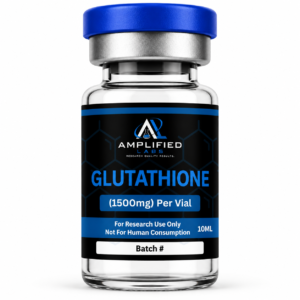
This collection holds two research materials: NAD+, a dinucleotide coenzyme, and glutathione, a tripeptide. They are chemically distinct and sold as separate listings, each supplied as lyophilized powder with its own labeled amount. The table below the product grid compares reference class, labeled amount and form. From there, open the product page and use the COA Finder to look for a matching original report. Both materials are sold for laboratory research use only.
If you’re comparing NAD+ or glutathione, see the Black Friday and Cyber Monday offer for regular-price eligibility and how to use the code.
Showing all 2 results
-
Antioxidants and Detox Agents
Glutathione – Antioxidant and Detox Agent
$58.00 Purchase & earn 58 Researcher points!Add to cart -
Antioxidants and Detox Agents
NAD+ Antioxidant and Detox Agent
$50.00 – $85.00Price range: $50.00 through $85.00 Earn up to 85 Researcher points.Select options This product has multiple variants. The options may be chosen on the product page
NAD+ and glutathione at a glance
| Material | Reference class | Nominal labeled amount | Supplied form |
|---|---|---|---|
| NAD+ | Dinucleotide coenzyme (oxidized form; the reduced form is NADH) | 500 mg or 1000 mg, chosen on the product page | Lyophilized powder |
| Glutathione | Tripeptide (gamma-glutamyl-cysteinyl-glycine) | 1500 mg, single option | Lyophilized powder |
Labeled amounts are the nominal quantities shown on each listing. They are not assay results.
Selecting a material and its report
NAD+ and glutathione are often discussed together, but they are different molecules with different roles in redox chemistry. NAD+ acts as an electron carrier in many enzymatic reactions, alternating with its reduced form, NADH. Glutathione is a small peptide that takes part in redox reactions and serves as a cofactor for some enzymes. Neither stands in for the other, so select the compound your work specifies.
Check the current options on the product page linked in the table, then search the COA Finder for a record that matches the material and option you selected. A report describes the sample it names; it does not establish the lot currently dispatched or the purity of all stock.
NAD+ and glutathione questions
Are NAD+ and glutathione both peptides?
No. Only glutathione is a peptide: a tripeptide, gamma-glutamyl-cysteinyl-glycine, built from glutamate (glutamic acid), cysteine and glycine. NAD+ is the oxidized form of nicotinamide adenine dinucleotide, a coenzyme made of two linked nucleotides rather than amino acids. Listing it alongside peptide research materials does not change its class. See the NLM MeSH entries for NAD and glutathione.
What physical forms are listed for NAD+ and glutathione?
Both current listings describe lyophilized (freeze-dried) powder supplied in research vials. NAD+ and glutathione are chemically different materials, so the shared powder format does not make them interchangeable. For listing details, see the NAD+ and glutathione product pages.
Does this collection include a combined NAD+ and glutathione product?
No. The collection contains two separate listings, NAD+ and glutathione, and no combined vial or fixed blend. Ordering both means two separate items, not one formulation. Select each material from its own listing and look for a matching report for each.
Which NAD+ amount options are shown on the product page?
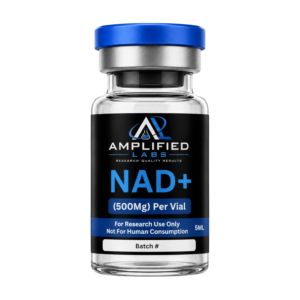
The NAD+ product selector offers two nominal amounts: 500 mg and 1000 mg. The milligram figure is the labeled quantity of material, not a liquid volume or a final concentration. The product image shows the 500 mg vial only, so check the selected option before ordering.
How can I check an original report for NAD+ or glutathione?
Search the COA Finder by product name or full lot number. Where a matching record appears, open the original report linked from it and compare the material, labeled amount, form, sample or lot reference and document identifiers with the item you are checking, and read any matching note shown on the record. Rely only on the tests and results the report actually lists; an archived result does not confirm the lot currently dispatched or every amount option.