

TB-500 + BPC-157 (Wolverine Stack) – Recovery and Repair Peptide
Price range: $50.00 through $79.00
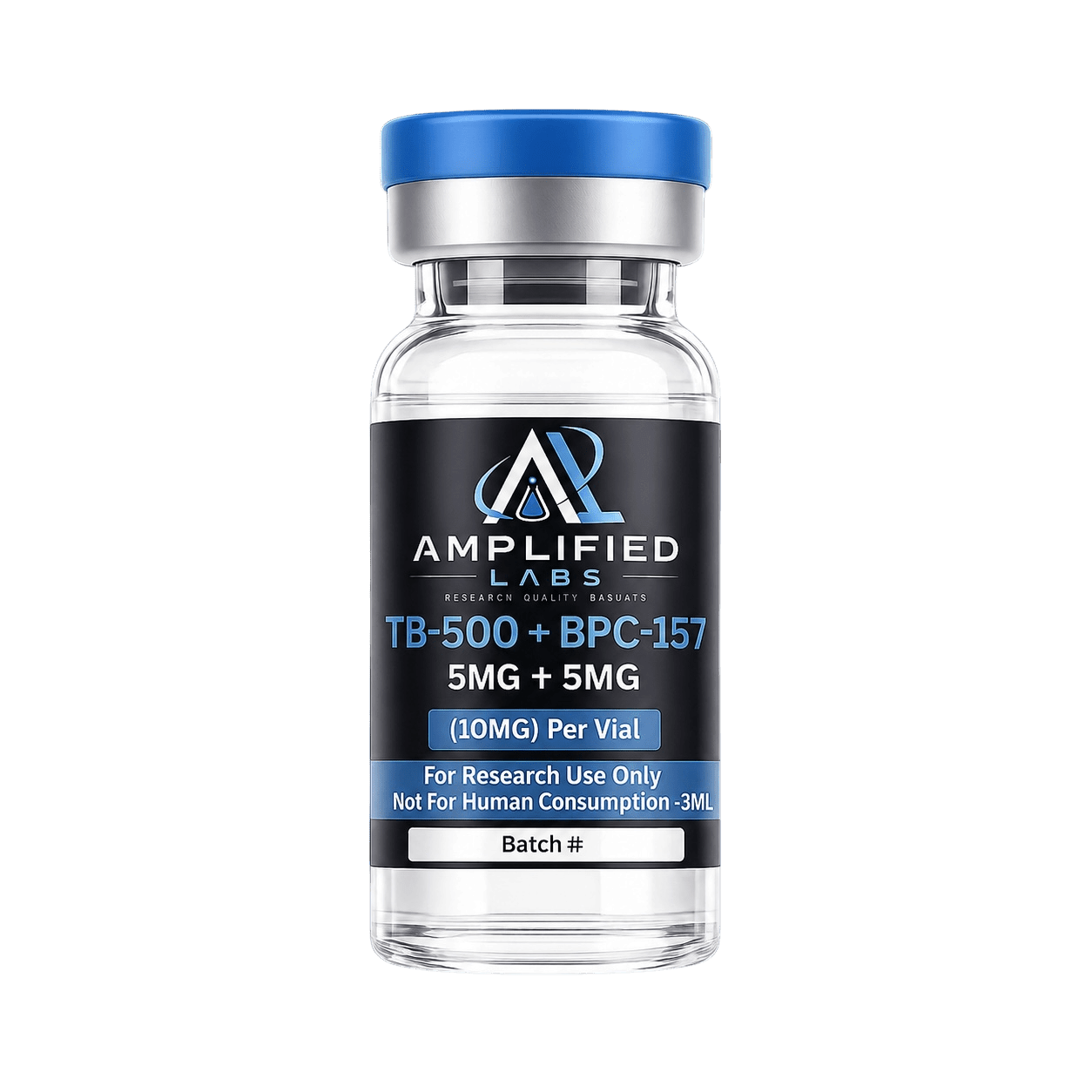
Each vial holds 10 mg total with 5 mg TB-500 and 5 mg BPC-157, or 20 mg total with 10 mg TB-500 and 10 mg BPC-157.

TB-500 + BPC-157 – Dual Research Peptide Blend
This dual peptide formulation combines TB-500 and BPC-157, two peptides frequently examined in laboratory environments for research involving cellular signaling pathways, peptide-mediated response mechanisms, and structural protein interaction models. The blend provides researchers with a consolidated option for studying multi-pathway signaling dynamics and peptide interaction behavior within controlled experimental systems.
Research-Use-Only Laboratory Material
Lyophilized peptide blend supplied in standard laboratory vials.
Not for injection. Not for clinical or therapeutic use.
🔹 Product Specifications
- Form: Lyophilized Powder Blend
- Appearance: White to off-white powder
- Purity: ≥ 98% (per constituent)
- Storage: Store in a cool, dry environment. Refrigerate after reconstitution.
Blend Amounts
Each option contains equal amounts of TB-500 and BPC-157. The 10 mg blend contains 5 mg of each peptide. The 20 mg blend contains 10 mg of each peptide.
| Total blend amount | TB-500 | BPC-157 |
|---|---|---|
| 10 mg | 5 mg | 5 mg |
| 20 mg | 10 mg | 10 mg |
Wolverine Stack combines TB-500 and BPC-157 as one lyophilized blend in each vial. Each material is also available on its own as standalone TB-500 and standalone BPC-157.
🧪 Molecular Information (Individual Components)
- BPC-157
CAS: 137525-51-0
Molecular Formula: C62H98N16O22
Molecular Weight: 1419.54 g/mol
- TB-500 (Thymosin Beta-4 Fragment)
CAS: 77591-33-4
Molecular Formula: C212H350N56O78S
Molecular Weight: 4963.49 g/mol
🔬 Research Applications
- Cell migration and cytoskeletal signaling pathway studies
- Peptide-mediated cellular interaction modeling
- Angiogenesis and vascular signaling pathway research
- Investigations involving epithelial cell signaling mechanisms in controlled laboratory models
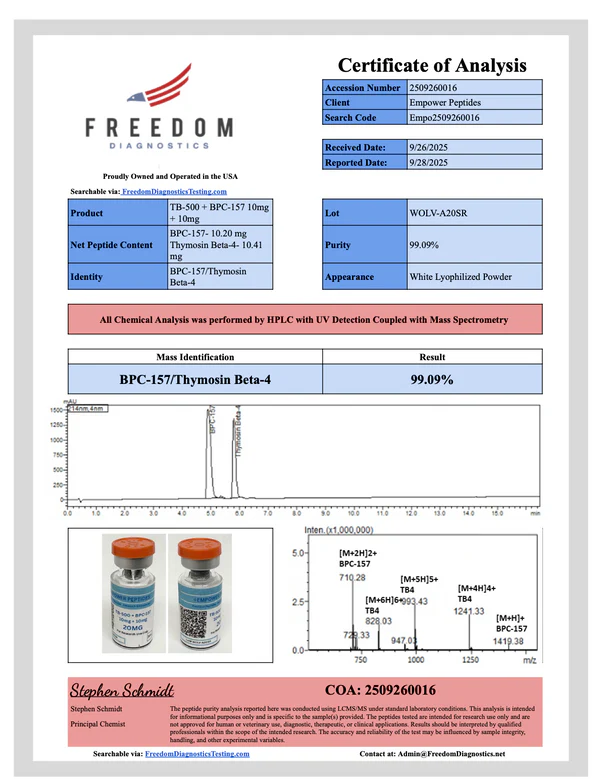
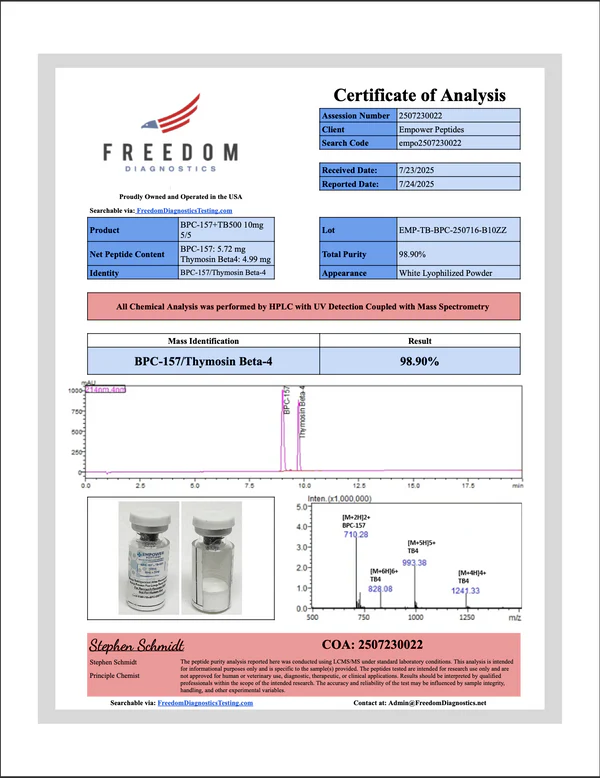
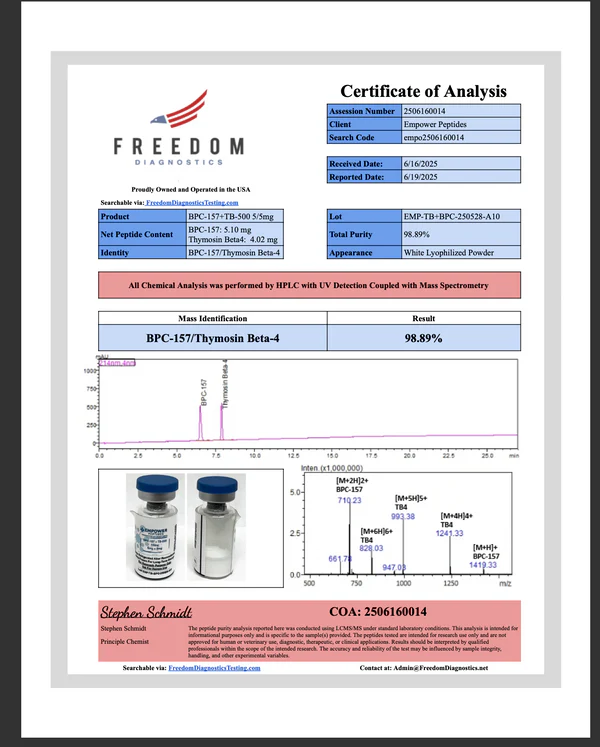
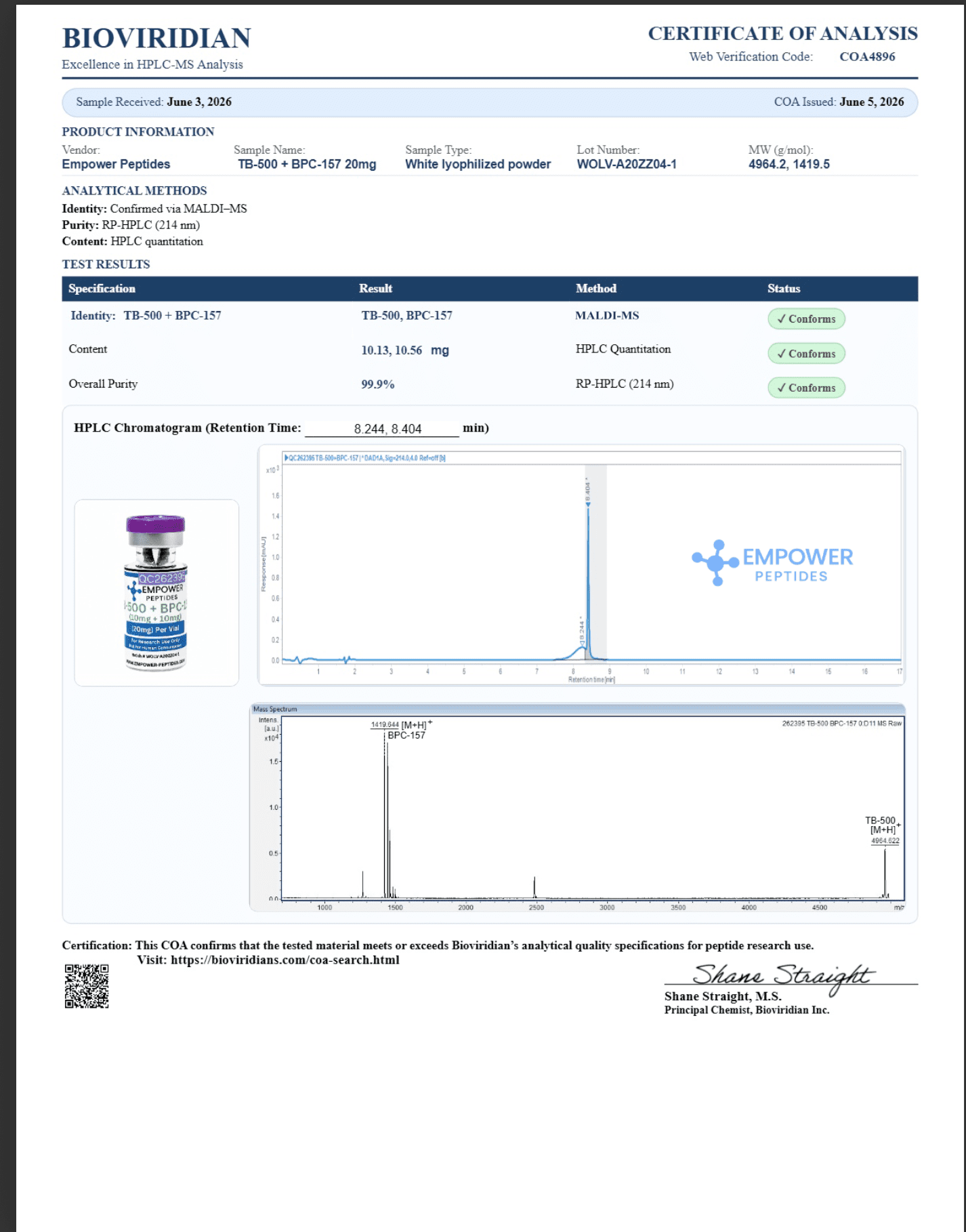
TB-500 + BPC-157 Certificate of Analysis (COA)
Each report applies only to the sample it lists. To find yours, match the lot number on your vial, then check the listed component and strength where shown.
TB-500 + BPC-157 (Wolverine Stack) – Frequently Asked Questions (Research Use Only)
This FAQ provides structured, research-focused information about the TB-500 + BPC-157 dual peptide formulation, commonly referred to as the Wolverine Stack in research catalog terminology.
1. What is TB-500 + BPC-157 (Wolverine Stack)?
This formulation is a dual peptide blend combining TB-500 and BPC-157, designed for laboratory research involving peptide signaling pathways and cellular interaction models.
2. What is the TB500 BPC 157 blend used for in research?
The tb500 bpc 157 blend is used in non-clinical laboratory studies involving cytoskeletal signaling, peptide-mediated cellular interaction modeling, and angiogenesis-related pathway research.
3. Why do researchers study dual peptide blends in cellular signaling models?
Dual peptide blends allow researchers to evaluate interactions across multiple signaling pathways simultaneously, offering insight into complex biochemical and structural processes under controlled experimental conditions.
4. What does wolverine stack for sale mean on a laboratory materials page?
Wolverine stack for sale is a catalog-style phrase indicating availability of a research material within a supplier listing. It does not imply any clinical, therapeutic, or consumer application.
5. Is TB-500 + BPC-157 approved for human or animal use?
No. This product is a research-use-only laboratory material. It is not for human consumption, not for injection, and not for clinical, therapeutic, or diagnostic use. It is intended solely for controlled laboratory environments.
Related research and documentation
Read the TB-500 and BPC-157 laboratory research overview for blend context and the BPC-157 evidence guide for standalone-compound background. Available batch documents are organized in the product COA library.
Peptide Blend Calculator
Use the peptide blend calculator to see each component's concentration and the component masses in an aliquot volume.
Wolverine 10 mg · Wolverine 20 mg
View lot documentation. A certificate of analysis applies only to the lot or lots it identifies. Compare the lot on your label with the document.
Labelling a research vial? Select this product in the free Peptide Label Maker to start a printable label with its name and labelled amount.
Peptide COA Finder
Find an available original report by product or full lot, then compare the document details with your label.
| Weight | 0.03 oz |
|---|
Related products
- Metabolic Research Peptides
AL-3RT — Triple-Receptor Research Compound
Price range: $70.00 through $135.00 Select options This product has multiple variants. The options may be chosen on the product page - Metabolic Research Peptides
AL-2TZ — Dual-Receptor Research Compound
Price range: $55.00 through $243.00 Select options This product has multiple variants. The options may be chosen on the product page
